What Size Skip Bin Do I Need for a Home Clean Up?
What size skip bin do I need for a home clean up? The right answer depends on how much rubbish you have, the type of waste you are removing and the size of your project.
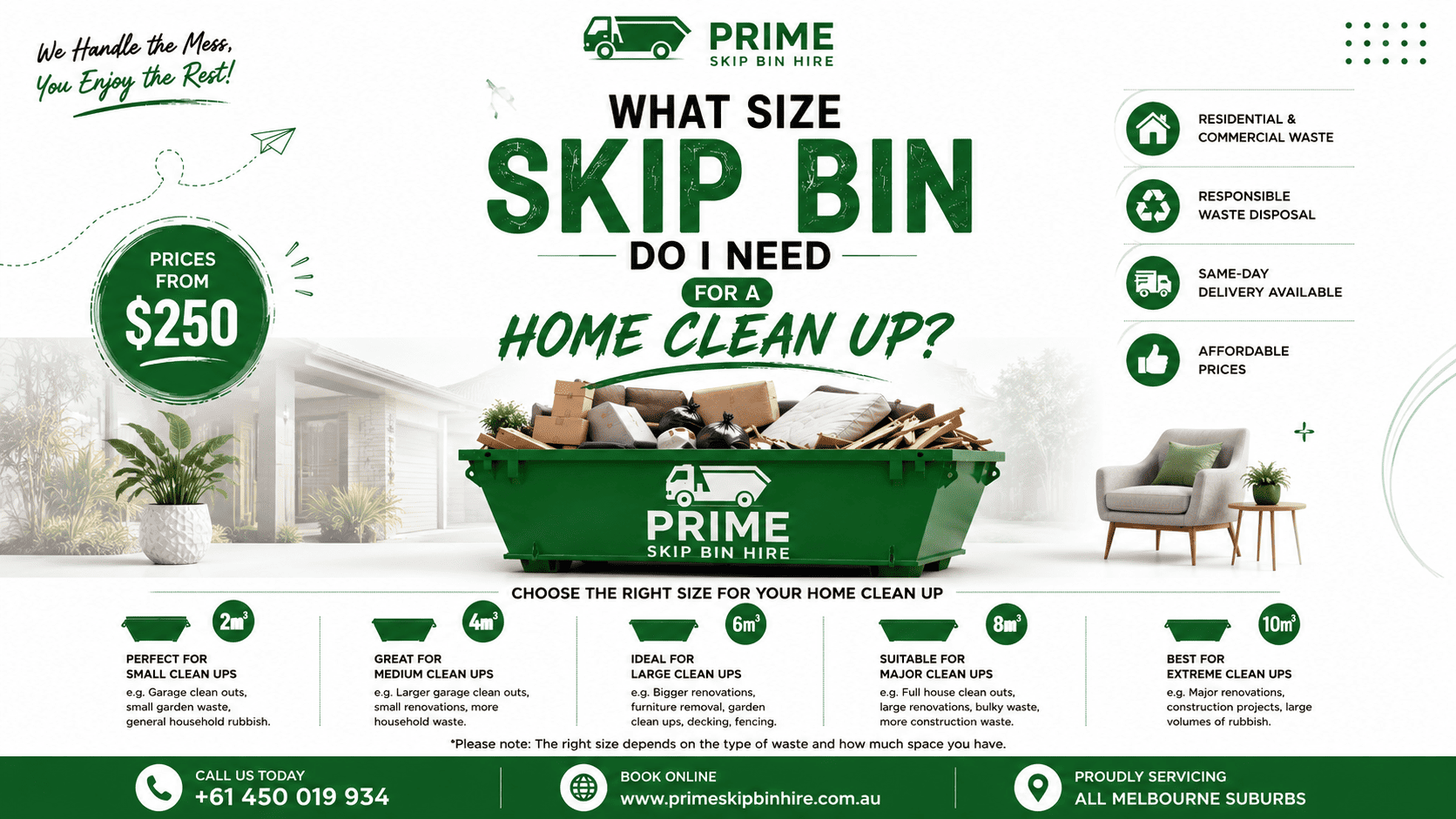
A small garage clean-out may only require a 2m³ skip bin, while a larger home clean-up, renovation or major decluttering project could require a 6m³, 8m³ or even 10m³ bin.
Choosing the right size can make your clean-up easier and help you avoid hiring a second bin because the first one was too small. However, you also do not want to pay for more capacity than your project requires.
At Prime Skip Bin Hire, we offer a range of skip bin sizes to suit different household, renovation and commercial waste removal projects.
Quick Answer: Which Skip Bin Size Do You Need?
Here is a simple guide to help you choose:
| Skip Bin Size | Best For |
|---|---|
| 2m³ | Small clean-ups, garage rubbish and light household waste |
| 4m³ | Medium home clean-ups, garage clear-outs and small renovations |
| 6m³ | Larger clean-ups, furniture removal and renovation waste |
| 8m³ | Major home clean-ups, bulky household waste and larger projects |
| 10m³ | Major renovations, large clean-outs and high volumes of rubbish |
The best choice depends on your individual project. Waste volume guides are approximate, and the actual amount a bin can hold depends on the shape and type of material being disposed of. Australian skip-bin guides commonly recommend choosing a bin based on waste volume, waste type and the available space for delivery.
2m³ Skip Bin: Best for Small Home Clean-Ups
A 2m³ skip bin can be a suitable option for smaller household projects.
For example, you may consider this size if you are:
- Cleaning out a garage
- Removing unwanted household items
- Completing a small garden tidy-up
- Decluttering one room
- Removing a small amount of general rubbish
This can be a practical choice when you do not have a large volume of waste.
However, bulky furniture and large household items can fill a smaller bin more quickly than expected. Therefore, if your clean-up includes sofas, mattresses, cabinets or a large amount of mixed rubbish, you may need to consider a larger option.
4m³ Skip Bin: Great for Medium Home Clean-Ups
A 4m³ skip bin can be a useful middle-sized option for homeowners with more than just a few bags of rubbish.
This size may suit:
- Garage and shed clean-outs
- Small renovation projects
- Household decluttering
- Garden and landscaping waste
- Moving house
- Bulky household rubbish
A 4m³ bin can provide more flexibility when you are unsure whether a smaller bin will be enough.
For many home clean-up projects, choosing a slightly larger bin can be more convenient than discovering halfway through the job that there is no space left.
6m³ Skip Bin: Ideal for Larger Clean-Ups
If you are dealing with a larger amount of household rubbish, a 6m³ skip bin may be a better choice.
This size can be suitable for:
- Large garage clean-outs
- Multiple-room decluttering
- Furniture removal
- Kitchen or bathroom renovation waste
- Larger garden clean-ups
- Moving or preparing a property for sale
A 6m³ skip bin provides more capacity for projects that generate a significant amount of mixed household waste.
Industry size guides commonly place 4m³ to 6m³ bins in the range suitable for larger household clean-ups, multiple rooms and moderate renovation projects.
8m³ Skip Bin: Suitable for Major Home Clean-Ups
An 8m³ skip bin may be suitable when you are clearing a substantial amount of rubbish.
You might consider this size for:
- A full-house clean-out
- Large furniture removal
- Major renovation work
- Large landscaping projects
- Bulky household waste
- Clearing several rooms at once
This size can provide the capacity needed when a project involves accumulated rubbish from multiple areas of a property.
Before ordering, remember to consider the available space for the bin and whether the delivery vehicle can safely access the location.
10m³ Skip Bin: Best for Large-Scale Projects
A 10m³ skip bin is generally more suitable for projects that produce a large volume of waste.
Examples include:
- Major home renovations
- Large property clean-outs
- Significant furniture removal
- Construction projects
- Large landscaping jobs
- Estate or whole-property clearances
If you are removing a large amount of bulky material, a larger bin may be more practical than arranging multiple smaller collections.
However, larger does not always mean better. The right choice depends on your waste volume, the type of rubbish and the available space at your property.
How to Choose the Right Skip Bin Size for Your Home Clean-Up
When deciding what size skip bin you need for a home clean up, there are several important questions to ask.
1. How Much Rubbish Do You Have?
Start by estimating the volume of your waste.
Walk through your property and identify everything you plan to throw away. Consider items in:
- The garage
- The shed
- Bedrooms
- Living areas
- The garden
- Storage spaces
- Outdoor areas
Try to estimate whether you are removing a few large items, several trailer loads or a substantial amount of accumulated household rubbish.
If you are unsure, taking photos of the waste before booking can also help you explain the size of your project.
2. What Type of Waste Are You Removing?
The type of rubbish matters just as much as the amount.
Your home clean-up may include:
- General household waste
- Furniture
- Timber
- Green waste
- Tiles
- Bricks
- Plasterboard
- Renovation materials
Some waste types may have different handling or disposal requirements. EPA Victoria advises homeowners to understand how renovation and construction waste should be managed and to ensure waste is taken to an authorised facility.
External resource: EPA Victoria – Home Renovation Waste Guidance
3. How Bulky Is the Waste?
A bin can fill up quickly when the waste includes bulky items.
For example:
- Sofas
- Cabinets
- Tables
- Mattresses
- Large furniture
- Building materials
These items can take up significant space even if they are not particularly heavy.
Therefore, do not estimate your bin size based only on weight. Consider the physical volume of the rubbish as well.
4. How Much Space Do You Have for the Skip Bin?
Before booking, consider where the skip bin will be placed.
Check:
- Driveway space
- Access for the delivery truck
- Clearance around the delivery area
- Any obstacles
- Whether the bin will need to be placed on private or public land
The physical dimensions of bins can vary between suppliers and bin types, so it is always sensible to confirm the required placement space before booking.
Should You Choose a Bigger Skip Bin?
If you are choosing between two sizes, it can be worth carefully considering the larger option.
Underestimating your rubbish volume can create additional problems. For example, you may need another bin or an additional collection.
On the other hand, you should not automatically choose the biggest bin available. The goal is to select a size that gives you enough capacity for your project without paying for unnecessary space.
The best approach is to estimate your waste realistically and discuss your project requirements before booking.
Can You Overfill a Skip Bin?
No. Waste should not extend above the top edge of the skip bin.
Overfilled bins can create safety issues during transport and may not be suitable for collection until the excess waste is removed. Skip-bin guidance also warns that overfilling can result in collection problems or additional charges.
For this reason, it is important to choose a bin with enough capacity for your expected waste.
What Is the Best Skip Bin Size for a Home Clean-Up?
For a quick answer:
Choose a 2m³ bin if:
You have a small amount of household rubbish, a garage clean-out or a light decluttering project.
Choose a 4m³ bin if:
You are completing a medium-sized clean-up, clearing a garage or shed, or removing household and renovation waste.
Choose a 6m³ bin if:
You have a larger amount of rubbish, multiple rooms to clear or a renovation project.
Choose an 8m³ bin if:
You are completing a major home clean-up or removing bulky household items and large amounts of waste.
Choose a 10m³ bin if:
You are undertaking a major renovation, large-scale property clean-out or another project that produces a high volume of rubbish.
Need Help Choosing the Right Skip Bin?
If you are still asking, “What size skip bin do I need for a home clean up?”, the easiest solution is to look at the amount and type of waste you have before booking.
Prime Skip Bin Hire can help you choose a suitable option for:
- Home clean-ups
- Garage and shed clear-outs
- Renovations
- Garden waste
- Furniture removal
- Commercial waste
- Construction projects
By choosing the right skip bin size, you can make your waste removal project more convenient and avoid the frustration of running out of space.
Book Your Skip Bin with Prime Skip Bin Hire
Whether you need a compact 2m³ bin for a small clean-up or a larger 10m³ skip bin for a major project, choosing the right size starts with understanding your waste volume.
Call Prime Skip Bin Hire: +61 450 019 934
We Handle the Mess, You Enjoy the Rest!
Frequently Asked Questions
What size skip bin do I need for a home clean up?
The right size depends on the amount and type of waste. A 2m³ bin may suit a small clean-up, while 4m³ to 6m³ bins can suit medium or larger household projects. For major clean-outs, an 8m³ or 10m³ bin may be more suitable.
Is a 2m³ skip bin big enough for a house clean-up?
A 2m³ bin can be suitable for a small clean-up or limited amount of household rubbish. However, it may not provide enough capacity for a full-house clean-out or a project involving bulky furniture.
What size skip bin is best for a garage clean-out?
Depending on how much has accumulated in the garage, a 2m³ or 4m³ bin may be suitable. A larger garage containing furniture, storage boxes and bulky items may require a larger size.
What size skip bin is best for furniture?
Furniture can take up a large amount of space. For several large items, a 4m³ or larger bin may be more practical, depending on the number and size of the items.
Should I choose a bigger skip bin?
If you are genuinely unsure between two sizes and expect more rubbish to be added during the project, choosing the larger option may help reduce the risk of running out of capacity. The best choice depends on your waste type, volume and available space.